Get pay-per-api 402 right
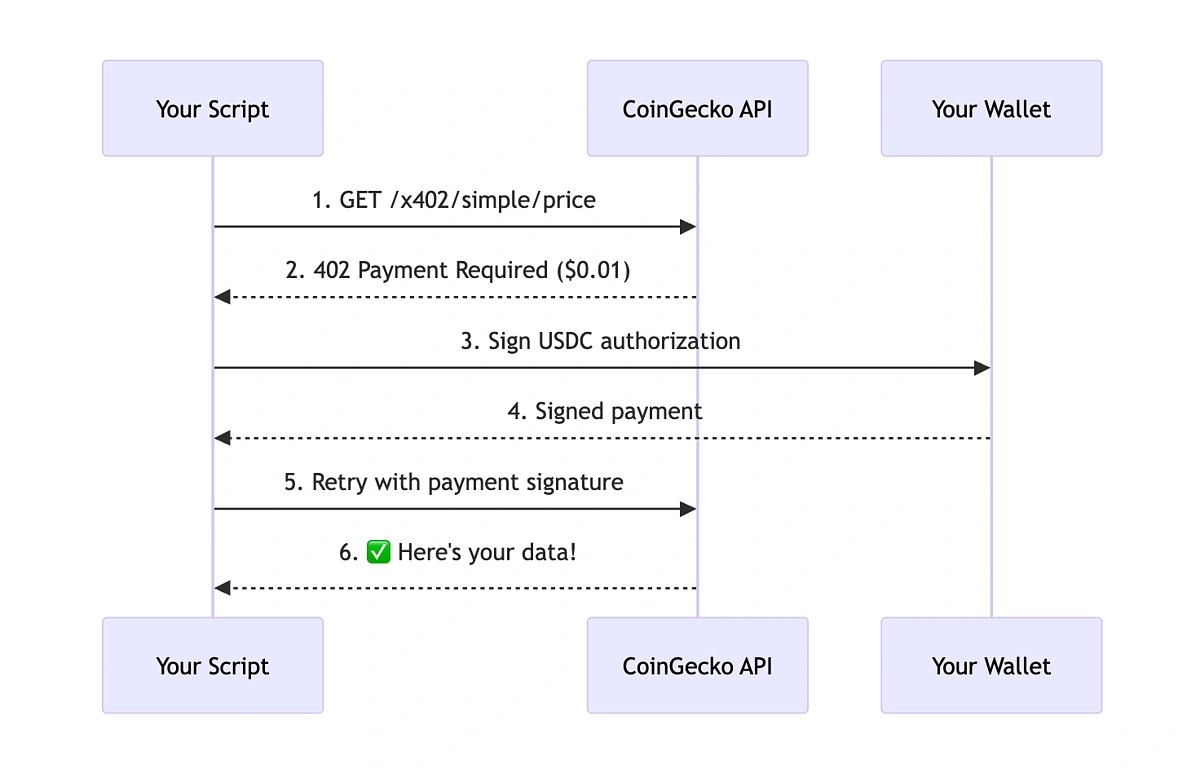
Before building or integrating, you need to understand the core mechanics of the HTTP 402 Payment Required status code. This protocol allows servers to request payment—typically in cryptocurrency like USDC—before delivering data or services. Unlike traditional API key models, 402 enables instant micropayments without user registration or wallet creation friction.
To implement this successfully, start by selecting a payment gateway that supports x402, such as Laevitas, which handles derivatives data via instant USDC transactions. Ensure your API endpoints are configured to return a 402 status when a payment is missing, along with a clear instruction on how to proceed. Always test the payment flow in a sandbox environment to verify that the client can seamlessly complete the transaction and retry the request.
A common mistake is ignoring error handling for failed payments. If a transaction fails, the server should provide a specific error message indicating the payment status, allowing the client to retry or adjust the amount. Additionally, monitor your API usage closely to prevent abuse, as the pay-as-you-go model can lead to unexpected costs if not properly capped or monitored.
Finally, document the payment requirements clearly in your API documentation. Developers need to know the accepted currencies, payment methods, and any associated fees. This transparency reduces support tickets and ensures a smoother integration process for users who want to leverage the efficiency of pay-per-API models.
Work through the steps
Pay-Per-API 402 works best as a clear sequence: define the constraint, compare the realistic options, test the tradeoff, and choose the path with the fewest hidden costs. That order keeps the advice usable instead of decorative. After each step, pause long enough to check whether the recommendation still fits the reader's actual situation. If it depends on perfect timing, unusual access, or a best-case budget, include a simpler fallback.
Common Pay-Per-API 402 Mistakes
Implementing HTTP 402 payment flows often fails due to misaligned expectations between client and server. These errors drain developer time and break user trust. Addressing them early prevents costly rewrites.
Ignoring Client-Side Payment UX
Developers frequently treat the 402 response as a simple error code rather than a payment prompt. The HTTP 402 Payment Required status code means the client must complete a payment before the server will fulfill the request. If your frontend does not recognize this status, it may retry infinitely or show a generic error, leaving the user stuck.
Skipping Payment Intent Verification
Many implementations assume the payment succeeded because the client sent the transaction hash. This is a critical security gap. You must verify the transaction on-chain before returning the API data. Without this step, users can spoof payment proofs, leading to revenue loss and potential abuse of your infrastructure.
Using Static Rates for Volatile Assets
Pay-per-request models often rely on cryptocurrency micropayments. If you fix the USD equivalent but do not adjust for crypto volatility, your margin shrinks or disappears during market dips. Always calculate the required crypto amount based on real-time exchange rates at the moment of request initiation, not at the time of deployment.
Failing to Handle Retry Logic
Network failures during payment submission are common. If your API does not gracefully handle retries, users may pay multiple times for the same data. Implement idempotency keys or check transaction status before processing duplicate requests. This protects both the user's wallet and your accounting integrity.
Pay-per-api 402: what to check next
Before integrating x402 or HTTP 402 into your infrastructure, it helps to clarify how these protocols handle payments, security, and standard compliance. The following answers address the most common technical and operational objections.
No comments yet. Be the first to share your thoughts!